

Nsight Health / PRVNT · Product design & mobile and web engineering
We designed and built PRVNT
for patients and care teams.
Twenty Ideas designed and built PRVNT for Nsight Health, a connected remote-care platform with a patient mobile app for iOS and Android and a web-based experience for care teams.
Explore the patient app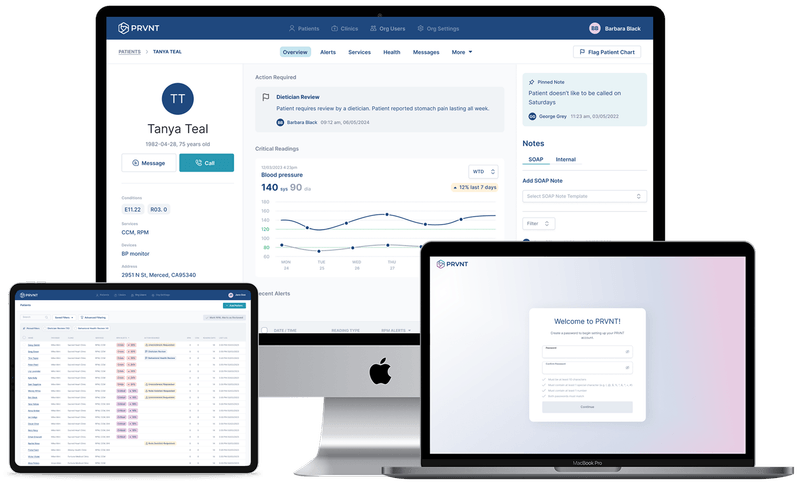
01 / The challenge
A vision for care.
A platform to match.
Nsight Health’s ambition was to transform care. Its remote-care model brings together ongoing monitoring and regular conversations with patients. The team wanted a platform shaped around that model and the needs of the people delivering it.
More about the challenge
Nsight brought an established care model and a clear ambition for a custom platform. Patient information, monitoring and calling all needed a place in a platform designed for that work.
The goal was to replace Nsight’s core system with a custom platform designed around its remote-care model and the responsibilities of the people using it.
- Client / product
- Nsight Health / PRVNT
- Our contribution
- Product design, iOS & Android app, care-team web platform, infrastructure & EHR integrations
- Users
- Care teams, clinicians & patients
- Launch milestone
- January 1, 2025
The patient mobile app / iOS & Android
Remote care,
in patients’ hands.
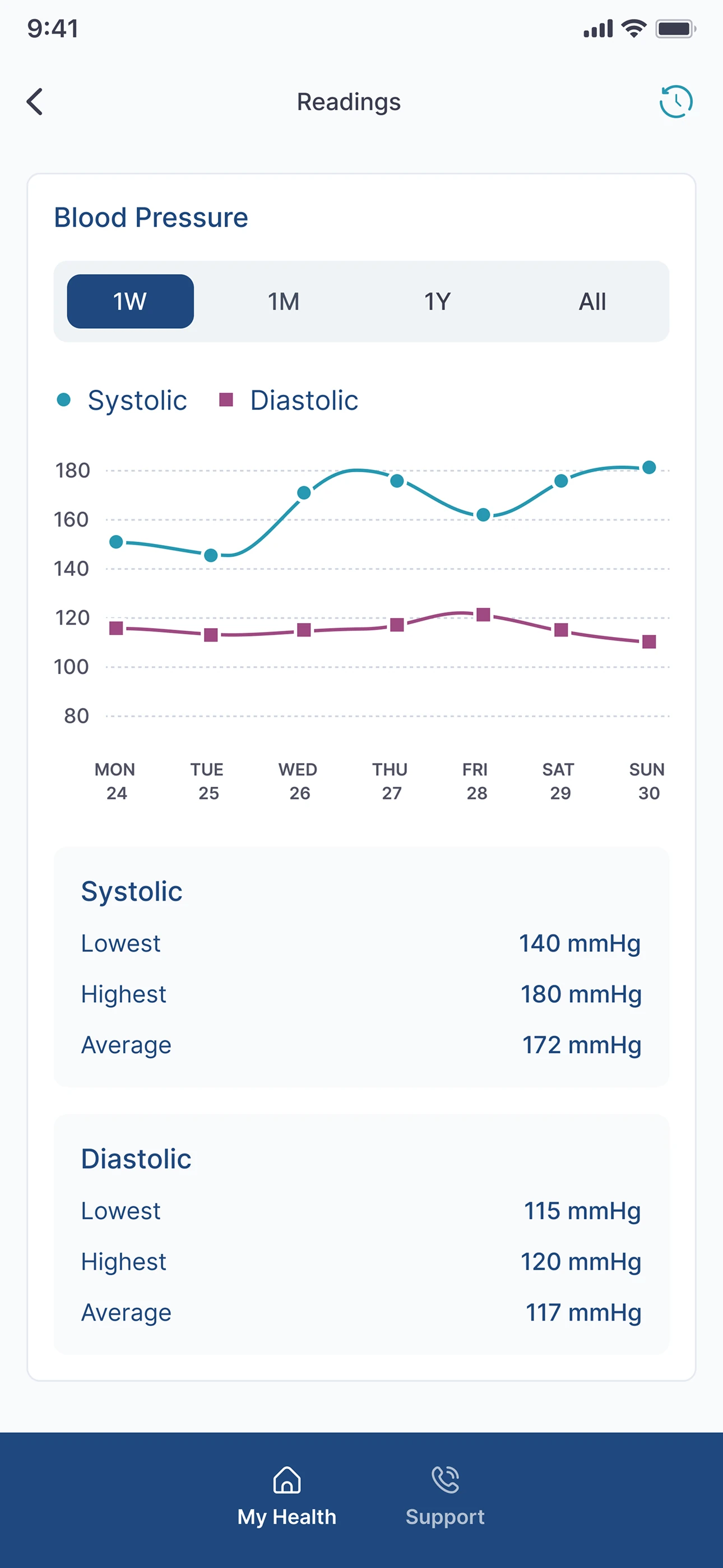
Patients can follow readings and trends from paired devices, keep medications and allergies up to date, and stay connected with their remote-care program.
The app connects to PRVNT’s patient records and care-team web platform, where providers review readings, call patients and document care.
PRVNT is Nsight Health’s platform. The patient app is published by PRVNT, Inc.
Reading the bigger picture
A measurement
needs context.
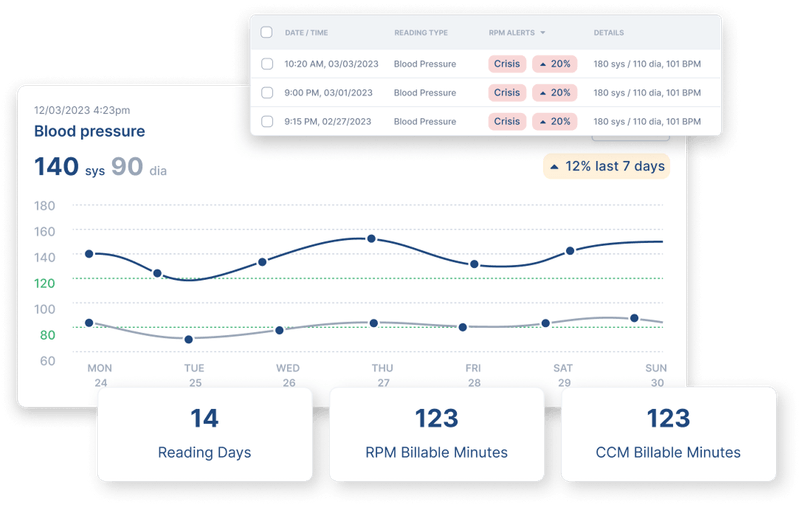
PRVNT brings data from remote-monitoring devices, including blood pressure cuffs, glucometers and spirometers, into the care journey.
Trends, alerts and monitoring activity help providers review readings alongside the patient’s history. A data point becomes part of the record a care team uses to understand what is happening over time.
The experience also supports the earlier steps: setting up a device, learning to take readings, keeping a monitoring schedule and interpreting results. Product design has to consider adoption as well as the screen showing the data.
02 / Inside the product
The next call starts
with the whole patient.
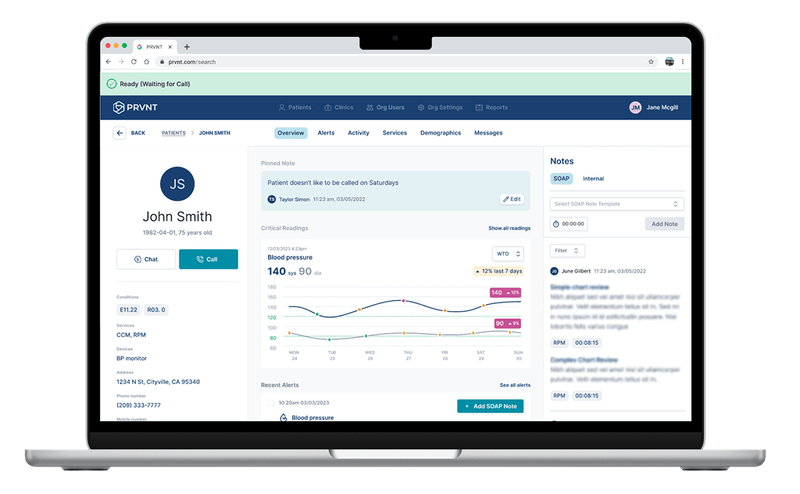
Nsight’s model depends on human conversations. PRVNT brings the information supporting those conversations into the care-team workspace.
Bring the context to the call.
Calling is integrated with patient information and remote-monitoring data. Providers can review what matters to the conversation within the same workflow.
Keep the record close.
The Patient Chart brings clinical notes into the experience. SOAP notes (subjective, objective, assessment and plan) connect documentation to the patient’s record and calling software.
Design around the work.
Input from Nsight’s care providers and review of established EHR tools informed the patient-chart experience. The task was to make those capabilities work together for remote care.
From the people using it
“Without having to worry about getting lost between screens – copying and pasting and switching back and forth with each call (wait, which note was that??) – I feel WAY less stressed throughout the day.”
Licensed Vocational Nurse Remote Care Provider, Nsight Health
Supporting different responsibilities
One platform.
More than one way
to do the work.
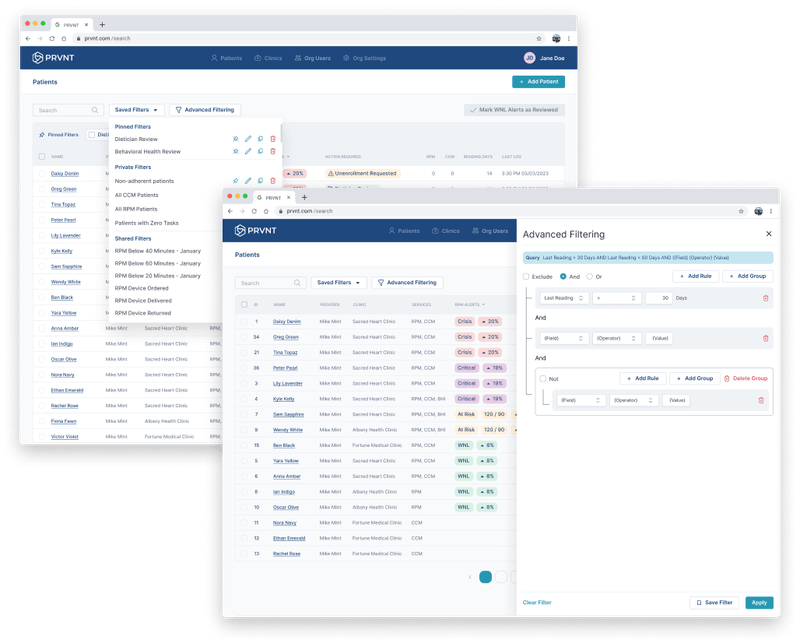
Nsight’s clinicians, administrative teams and other healthcare providers have different responsibilities within the same care model.
PRVNT uses role-based permissions to support different access needs. Patient-list filters give users ways to find the information and work relevant to their role.
This is an important part of the product challenge: connect the organization’s work while keeping each person’s view useful to their own task.
03 / The partnership
Care expertise.
Product judgment.
Connected delivery.
Nsight’s CTO and product lead brought technical and product leadership grounded in their care model. Twenty Ideas designed and built the patient mobile app and care-team web platform, including infrastructure and EHR integrations, working alongside them to bring PRVNT into use.
Map the care journey.
Work with Nsight’s team to understand its care model, the responsibilities of each role and the connections the new platform needed to support.
Design around the task.
Use provider input to shape the patient chart, calling experience and role-specific views. Bring essential information closer to the activity it supports.
Build through to launch.
Build the patient mobile app, care-team web platform, infrastructure and EHR integrations, then carry the work through the transition from Nsight’s existing core system to PRVNT.
04 / The platform
Bring it all together.
A patient app for iOS and Android.
A connected web workspace for care teams.
January 1, 2025 / Into daily use
A new year.
A new core platform.
On January 1, 2025, PRVNT successfully replaced Nsight’s core system. The launch put the custom platform into operational use. That milestone brought together design, implementation, infrastructure, EHR integrations and the transition from the existing system.
The platform supported Nsight’s expansion into three major U.S. health networks, extending the reach of its care model.
“Twenty Ideas was a crucial partner in pushing this launch over the finish line”
The technology behind the product
One product. A connected stack.
A patient app, a care-team workspace and the services connecting their work. We designed and built the mobile and web experiences alongside Nsight’s CTO and product lead.
Care-team web experience
React supports the care-team web platform, bringing patient information and clinical workflows into the browser.
Patient mobile experience
React Native supports the patient mobile experience, including readings and health information.

Application services
NestJS and TypeScript form part of the service stack supporting the connected product.
Cloud infrastructure
AWS forms part of the project infrastructure, alongside the EHR connections needed by the platform.
EHR integrations connect patient information; role-based permissions support different responsibilities in the care team. Our contribution included design, implementation and infrastructure.
Discuss security and delivery requirementsWhat could work better?
Your team knows the work.
Let’s build around it.
Bring us the workflow, the systems you depend on and the part that needs to change.
How we build and evolve products